 Technology
What Is Cloud Computing? A Beginner's Guide to How the Cloud Works (2026)

Sunil Kumar Uikey
Founder & Editor-in-Chief
Learn what cloud computing is, how it works, its benefits, types, and real-world examples. A complete beginner-friendly guide for 2026.
Introduction
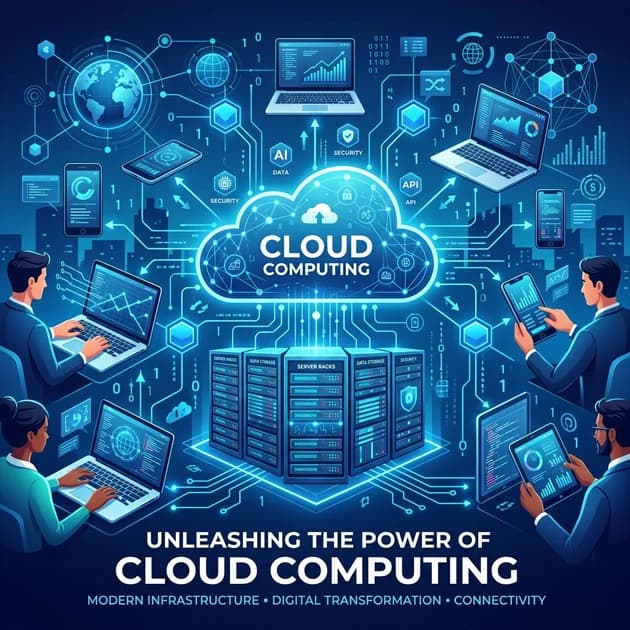
If you have ever saved a document to Google Drive, watched a series on Netflix, or sent an email through Gmail, you have already used cloud computing. You just may not have known it by that name.
Cloud computing is the invisible infrastructure behind most of the digital experiences we take for granted in 2026. It powers the applications businesses depend on, the platforms students learn with, the streaming services we relax with, and the AI tools that are reshaping professional life. Understanding what cloud computing is—and why it works the way it does—gives you a meaningful advantage, whether you are a student exploring technology trends, a business owner evaluating software options, or a professional navigating the modern digital workplace.
This guide explains cloud computing from the ground up in plain English. No technical background required.
Quick Answer
What is Cloud Computing? Cloud Computing is the delivery of on-demand computing services—including servers, storage, databases, and software—over the Internet. Instead of buying and maintaining physical hardware, users access scalable digital infrastructure hosted in remote data centers owned by cloud providers. This model allows organizations to pay only for the resources they use, ensuring massive flexibility, cost savings, and the ability to power advanced technologies like AI and the Internet of Things globally.
Key Takeaways
- Cloud computing is a delivery model that makes IT resources available over the internet from shared, remote infrastructure.
- Three primary service models exist: Infrastructure as a Service (IaaS), Platform as a Service (PaaS), and Software as a Service (SaaS).
- Four deployment types are in common use: public, private, hybrid, and multi-cloud.
- The cloud's core value is flexibility: rapidly scale up resources during high demand, scale them back down when demand drops.
- Security and compliance are shared responsibilities between the cloud provider and the customer.
- Cloud computing is foundational to Artificial Intelligence, IoT, and Edge Computing.
How Does Cloud Computing Work?
To understand cloud computing properly, it helps to understand what happens behind the scenes when you click "save," "play," or "send."
Cloud Computing Architecture Diagram
       [Users]
          │
          ▼
      [Internet]
          │
          ▼
    [Load Balancer]
          │
          ▼
   [Cloud Platform]
          │
          ├── Virtual Machines
          ├── Containers
          ├── Storage
          ├── Databases
          ├── AI Services
          └── Networking
          │
          ▼
    [Applications]
Cloud Technology Ecosystem
How does the cloud act as the foundation for the modern digital world?
       [Internet]
          │
          ▼
   [Cloud Computing]
          │
          ▼
[Artificial Intelligence]
          │
          ▼
    [Edge Computing]
          │
          ▼
  [Internet of Things]
          │
          ▼
[Digital Transformation]
Data Centers: The Physical Foundation
Cloud computing is not magic—it is physical. Behind every cloud service is a network of massive, highly engineered facilities called data centers. These buildings house tens of thousands of servers (powerful computers), storage systems, networking equipment, and the power and cooling infrastructure required to keep them running 24 hours a day.
Virtualization: One Machine, Many Tenants
A single physical server in a data center is enormously powerful. Virtualization solves the problem of wasted capacity by dividing a single physical server into multiple isolated "virtual machines" (VMs). One physical server might host dozens of virtual machines, each serving a completely different customer.
Five Essential Characteristics of Cloud Computing
The National Institute of Standards and Technology (NIST), the authoritative technical standards body for cloud computing definitions, identifies five essential characteristics that define a true cloud service:
- On-demand self-service: A consumer can unilaterally provision computing capabilities, such as server time and network storage, automatically without requiring human interaction with each service provider.
- Broad network access: Capabilities are available over the network and accessed through standard mechanisms (mobile phones, tablets, laptops, and workstations).
- Resource pooling: The provider's computing resources are pooled to serve multiple consumers using a multi-tenant model, dynamically assigning physical and virtual resources according to consumer demand.
- Rapid elasticity: Capabilities can be elastically provisioned and released—often automatically—to scale rapidly outward and inward commensurate with demand. To the consumer, resources often appear to be unlimited.
- Measured service: Cloud systems automatically control and optimize resource use by leveraging a metering capability (storage, processing, bandwidth). Resource usage can be monitored, controlled, and reported, providing transparency.
Modern Cloud-Native Technologies
Modern applications are no longer just "lifted and shifted" to run on a cloud virtual machine. They are built specifically for the cloud—often referred to as cloud-native. The Cloud Native Computing Foundation (CNCF) and the Linux Foundation maintain the open-source standards driving these tools.
- Containers: Lightweight, standalone, executable packages of software that include everything needed to run an application (code, runtime, system tools, system libraries).
- Docker: The most popular open-source platform used to create, deploy, and run these containers.
- Kubernetes: An open-source system originally designed by Google (and now maintained by the CNCF) for automating the deployment, scaling, and management of containerized applications across massive clusters of hosts.
- Microservices: An architectural approach where a single application is composed of many loosely coupled and independently deployable smaller services (e.g., the shopping cart on an e-commerce site operates completely independently of the user review service).
- APIs (Application Programming Interfaces): The code that allows two different software programs to communicate with each other.
- Serverless Computing: A cloud execution model where the cloud provider dynamically manages the allocation and provisioning of servers. You write the code; the cloud handles the rest and charges only for the exact milliseconds the code runs.
- Infrastructure as Code (IaC): Managing and provisioning computing infrastructure through machine-readable definition files (like Terraform) rather than physical hardware configuration or interactive configuration tools.
Types of Cloud Computing
Public Cloud
Computing infrastructure is owned and operated by a third-party cloud provider (Amazon Web Services, Microsoft Azure, Google Cloud, IBM Cloud, Oracle Cloud) and made available to any customer over the internet.
Private Cloud
Infrastructure dedicated exclusively to a single organization. It can be physically located on the organization's own premises or hosted in a dedicated section of a third-party data center.
Hybrid Cloud
A hybrid cloud combines both public and private cloud infrastructure, connected and orchestrated to work as a unified environment.
Multi-Cloud
A multi-cloud strategy uses services from two or more different public cloud providers simultaneously to avoid vendor lock-in and select best-of-breed services.
Cloud Service Models: IaaS, PaaS, and SaaS
IaaS — Infrastructure as a Service
Provides the fundamental building blocks: virtual machines, storage, networking. (e.g., AWS EC2, Azure VMs).
PaaS — Platform as a Service
Provides a complete development and deployment environment. (e.g., Google App Engine, Heroku).
SaaS — Software as a Service
The provider manages everything—infrastructure, platform, and application. (e.g., Gmail, Netflix, Salesforce).
Shared Responsibility Model
Understanding who is responsible for Cybersecurity is critical, governed by standards like ISO/IEC 27017.
| Responsibility | IaaS | PaaS | SaaS |
|---|---|---|---|
| Physical Security | Cloud Provider | Cloud Provider | Cloud Provider |
| Host Infrastructure | Cloud Provider | Cloud Provider | Cloud Provider |
| Operating System | Customer | Cloud Provider | Cloud Provider |
| Applications | Customer | Customer | Cloud Provider |
| Identity & Access | Customer | Shared | Shared |
| Data Security | Customer | Customer | Customer |
Note: Regardless of the service model, the customer is ALWAYS ultimately responsible for protecting their own data.
How Different Industries Use Cloud Computing (Enterprise Adoption Matrix)
| Industry | Primary Cloud Use Case |
|---|---|
| Healthcare | Securely storing Electronic Health Records and running predictive AI diagnostics. |
| Finance | Real-time global fraud detection and massive algorithmic trading models. |
| Retail | E-commerce platforms scaling dynamically during Black Friday traffic spikes. |
| Manufacturing | Storing and analyzing Industrial IoT data for Industrial Automation. |
| Government | Hosting digital citizen services securely and scaling Smart Cities infrastructure. |
| Education | Hosting massive online learning platforms and virtual classrooms securely. |
Best Practices for Successful Cloud Adoption
To achieve genuine digital transformation, organizations must adhere to established enterprise best practices:
- Cloud Strategy First: Map the cloud migration to specific business goals, not just IT cost-cutting.
- Security by Design: Implement robust, identity-based Zero Trust security architecture from day one.
- Identity Management: Enforce strict Multi-Factor Authentication (MFA) and least-privilege access.
- Cost Optimization (FinOps): Implement strict tagging and monitoring to ensure you aren't paying for idle "zombie" servers.
- Backup & Disaster Recovery: Never assume the cloud is invincible. Maintain strict, automated cross-region backups.
- Compliance Alignment: Ensure the specific data center region complies with local data sovereignty laws (e.g., GDPR).
- Automation: Use Infrastructure as Code (Terraform) to deploy environments flawlessly and repeatedly.
Expand Enterprise Perspective
For the enterprise, the cloud is no longer just "someone else's computer"; it is the foundation of the Intelligent Enterprise. True cloud transformation involves adopting Hybrid IT models where legacy mainframes connect securely to modern microservices. Organizations are heavily prioritizing Cloud Governance and FinOps to control spiraling costs in multi-cloud strategies. Furthermore, cloud infrastructure is the absolute prerequisite for deploying AI infrastructure, ensuring seamless business continuity and bulletproof disaster recovery across a globally distributed Future of Work.
Future Outlook
Current Cloud Landscape
We are in the era of Hybrid and Multi-Cloud adoption, heavily reliant on Kubernetes for container orchestration and massive public cloud utilization for generative AI training.
Near Future (3–5 Years)
We will see the maturation of AI-native cloud platforms, where AI completely manages server provisioning and security patching autonomously. We will also see a massive expansion in Edge-cloud convergence, where 5G networks push cloud computing power directly into autonomous vehicles and smart factories to eliminate latency.
Long-Term Outlook
Looking ahead, the industry is heavily focused on Sustainable cloud infrastructure (hyperscalers achieving net-negative carbon emissions) and the highly anticipated commercialization of Quantum cloud services, where Quantum Computing power is rented by the millisecond to solve currently unsolvable chemical and logistical problems.
FAQ Section
What is cloud-native computing?
Cloud-native computing refers to building and running applications that exploit the advantages of the cloud computing delivery model (using containers, microservices, and serverless architectures) rather than simply running traditional software on a cloud server.
What is FinOps?
FinOps (Cloud Financial Operations) is a management practice that brings financial accountability to the variable spend model of cloud computing, helping engineering, finance, and business teams collaborate on data-driven spending decisions.
What is Kubernetes?
Kubernetes is an open-source container orchestration system that automates the deployment, scaling, and management of containerized applications across massive clusters of cloud servers.
What is serverless computing?
Serverless computing is a cloud execution model where the provider dynamically manages the allocation of machine resources. The developer writes code, and the provider charges only for the exact milliseconds that code executes, hiding all server management.
How secure is cloud computing?
Cloud infrastructure provided by major hyperscalers is generally far more secure than an individual company's private servers. However, security is a shared responsibility; if a customer configures their cloud storage bucket to be public, the provider cannot prevent a data breach.
Which cloud provider is best?
There is no single "best" provider. AWS offers the broadest range of services and highest market share. Microsoft Azure deeply integrates with enterprise Windows environments. Google Cloud is highly regarded for data analytics, Kubernetes natively, and open-source AI tools.
Can small businesses benefit from cloud computing?
Absolutely. Cloud computing (especially SaaS) allows small businesses to access enterprise-grade security, collaboration, and CRM tools for a small monthly subscription, completely eliminating the need for an in-house IT infrastructure team.
Final Verdict
Cloud Computing is the foundational digital infrastructure that enables modern applications, artificial intelligence, digital transformation, and globally connected services.
By seamlessly combining virtualization, advanced networking, limitless storage, automation, enterprise-grade security, artificial intelligence, containerization, and edge computing, the cloud delivers scalable, resilient, and cost-efficient computing for individuals, businesses, and governments worldwide.
To understand how this infrastructure powers the next generation of human innovation, we strongly encourage you to explore the related Locitra Technology pillar articles below.
Further Reading
To explore the exact standards, open-source frameworks, and enterprise documentation driving cloud computing, refer to the following authoritative resources:
- NIST Cloud Computing Program: The definitive government authority on cloud definitions and characteristics.
- Cloud Native Computing Foundation (CNCF): The open-source vendor-neutral hub for cloud-native technologies like Kubernetes.
- The Linux Foundation: The premier organization building sustainable open-source ecosystems.
- AWS Documentation: Comprehensive technical guides for the world's largest cloud provider.
- Microsoft Learn for Azure: Training and architecture guidelines for enterprise cloud deployment.
- Google Cloud Documentation: Deep technical resources for data-driven cloud architectures.
Related Articles
- Top Technology Trends Shaping 2026
- Edge Computing Explained: What It Is and Why It Matters
- What is Artificial Intelligence?
- What Is IoT? The Internet of Things Explained
- What Is Cybersecurity? A Complete Beginner's Overview
- How 5G Technology Works and Its Impact
- Digital Twins Explained: What They Are and Why They Matter
- Quantum Computing Explained: What It Is and Why It Matters
- Future of Work Technology Trends 2026
- Smart Cities Explained
- Industrial Automation Explained
Enjoyed this article?
Get practical AI tools, technology insights, software reviews, career growth advice, and online income strategies delivered to your inbox.
Keep Reading
Related Articles

Technology Trends in 2026: 10 Innovations Shaping the Future
Explore the definitive master guide to the top 10 technology trends shaping 2026. Discover how AI, edge computing, robotics, 5G, and sustainable innovation are converging to reshape the digital economy.
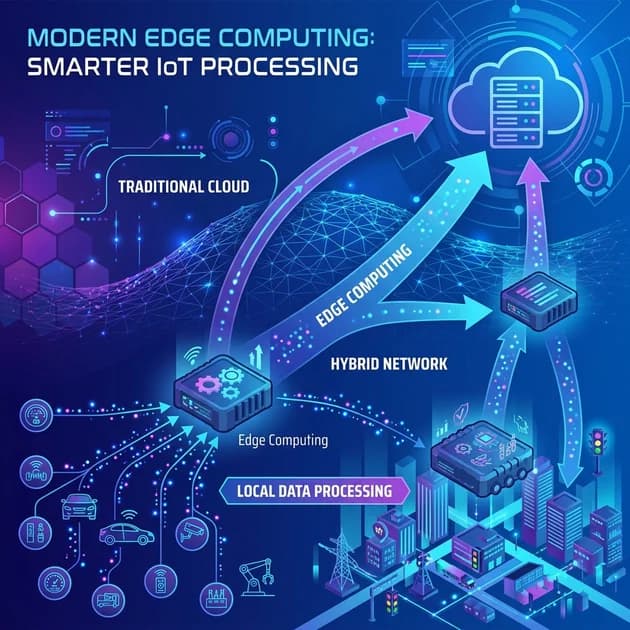
Edge Computing Explained: What It Is and Why It Matters in 2026
Learn what edge computing is, how it works, its benefits, real-world applications, and why it is becoming essential for IoT, AI, and 5G technologies.

 AI Tools
Best AI Writing Tools for Students (2026): Top AI Tools for Studying, Writing, Research, and Productivity
Discover the best AI writing tools for students in 2026. Compare ChatGPT, Claude, Gemini, Grammarly, Jasper, and QuillBot for essays, assignments, research, note-taking, and academic productivity.

Best AI Tools for Teachers in 2026: Reclaim Your Time and Transform Your Classroom
An in-depth guide to the best AI tools for teachers in 2026. Discover how to automate grading, generate lesson plans instantly, and personalize student learning.

 Online Income
Freelancing for Beginners: How to Start Earning Online with Your Skills
Learn how to start freelancing in 2026. Discover the best freelance skills, platforms, pricing strategies, and practical steps to earn your first client online.

 Career Growth
Top In-Demand Skills to Learn in 2026 for Career Growth and Higher Income
Discover the top in-demand skills for 2026 that will drive career growth and increase your income. Learn which technical and soft skills matter most today.