 Technology
Technology Trends in 2026: 10 Innovations Shaping the Future

Sunil Kumar Uikey
Founder & Editor-in-Chief
Explore the definitive master guide to the top 10 technology trends shaping 2026. Discover how AI, edge computing, robotics, 5G, and sustainable innovation are converging to reshape the digital economy.

Introduction
We are in the middle of a technological renaissance unlike anything witnessed since the Industrial Revolution. The innovations that once existed exclusively in science fiction laboratories—self-healing AI systems, autonomous logistics networks, digital replicas of physical machines—are now embedded deep inside the operational infrastructure of global enterprises. The question for professionals and business leaders in 2026 is no longer whether these technologies will affect them. It is whether they are moving fast enough to harness them before their competitors do.
This article serves as Locitra's flagship Technology Hub. It is the definitive evergreen guide to the 10 technology trends in 2026 that are restructuring global industries and creating a new baseline of digital competitiveness.
Quick Answer
What are the top Technology Trends shaping the future? The most impactful Technology Trends of 2026 are driven by the massive convergence of Artificial Intelligence, Cloud Computing, Edge Computing, and 5G connectivity. These foundational layers power breakthroughs in Intelligent Automation, Cybersecurity, and Robotics. Ultimately, true Digital Transformation and corporate Innovation occur not by adopting one technology in isolation, but by integrating these advanced systems together to build a faster, highly resilient, autonomous enterprise.
Key Takeaways
- AI is the foundational layer, not a standalone tool. Every major trend in 2026 depends on or is accelerated by Artificial Intelligence.
- Edge computing and cloud are complementary. Real-time processing at the edge is essential for latency-sensitive applications like autonomous vehicles.
- Cybersecurity is existential. The expansion of IoT surfaces makes Zero Trust Architecture a non-negotiable standard.
- 5G enables everything else. Without ultra-low latency, smart cities and IIoT remain theoretical.
- Convergence is key. Innovation happens when technologies amplify one another.
The Modern Technology Ecosystem
To understand the digital landscape, you must understand how these systems stack together.
Technology Ecosystem Architecture
       [Artificial Intelligence]
                 │
                 ▼
          [Cloud Computing]
                 │
                 ▼
          [Edge Computing]
                 │
                 ▼
        [Internet of Things]
                 │
                 ▼
          [5G Connectivity]
                 │
                 ▼
       [Intelligent Automation]
                 │
                 ▼
               [Robotics]
                 │
                 ▼
             [Smart Cities]
                 │
                 ▼
            [Future of Work]
Why Technology Trends Converge (The Convergence Framework)
Innovation happens through convergence, not isolated technologies. A single technology rarely changes the world; it is the combination that creates disruption.
For example, Cloud Computing provides the massive storage required to train AI models. That AI is then deployed to Edge Computing devices to analyze real-time data collected by the Internet of Things (IoT). That data must travel over ultra-fast 5G networks to power Industrial Automation systems. These systems direct physical Robotics on the factory floor, which are perfectly simulated using Digital Twins to build entirely Smart Cities.
Technology Adoption Lifecycle
Where do these technologies currently sit on the maturity spectrum?
| Stage | Description | Key 2026 Trends |
|---|---|---|
| Emerging | High potential, heavy R&D, limited enterprise deployment. | Artificial General Intelligence (AGI), Quantum Computing |
| Growing | Entering rapid enterprise adoption and massive scaling. | Agentic AI, Extended Reality (XR), Digital Identity |
| Mainstream | Widely adopted, proven ROI, standard infrastructure. | 5G, Intelligent Automation, Machine Vision |
| Mature | Deeply embedded, foundational necessity for operations. | Cloud Computing, IoT, Mobile Internet |
| Transformational | Radically alters economies, governments, and society. | Generative AI, Future of Work structures |
Standards Shaping Modern Technology
Without global standards, the modern technology ecosystem would collapse into isolated, incompatible silos. Ensuring interoperability, safety, and trust is the mandate of several massive organizations:
- ISO (International Organization for Standardization): Defines the critical frameworks for everything from information security (ISO 27001) to smart city performance.
- IEEE (Institute of Electrical and Electronics Engineers): The backbone of hardware standards, dictating how Wi-Fi and 5G protocols physically operate.
- NIST (National Institute of Standards and Technology): Provides the gold-standard frameworks for Cybersecurity and AI Risk Management.
- ITU (International Telecommunication Union): A UN agency coordinating global telecom operations and 6G development.
- W3C (World Wide Web Consortium): Maintains the foundational standards of the internet.
- European Union AI Act & OECD AI Principles: The leading legal and ethical guardrails ensuring AI systems respect human rights and remain unbiased.
How These Technologies Work Together (Relationship Matrix)
Technologies are highly interdependent ecosystems:
| Technology | Depends On | Enables |
|---|---|---|
| AI | Cloud Computing | Intelligent Automation |
| Cloud Computing | Broadband Networks | Scalable AI & Big Data |
| Edge Computing | Cloud Infrastructure | Autonomous Systems & Low Latency |
| IoT | 5G Connectivity | Smart Cities & Digital Twins |
| Digital Twins | IoT + AI | Predictive Maintenance |
| Robotics | Machine Vision & AI | Human-Robot Collaboration |
| Blockchain | Cryptography | Digital Identity |
Industries Most Affected (Impact Matrix)
| Industry | Highest-Impact Technologies |
|---|---|
| Healthcare | AI Diagnostics, Digital Twins, Robotics |
| Manufacturing | Industrial Automation, IIoT, Machine Vision |
| Finance | AI, Cybersecurity, Blockchain |
| Transportation | Autonomous Vehicles, 5G, Edge Computing |
| Government | Smart Cities, Digital Identity, Cloud |
| Retail | AI, Cloud, IoT, XR |
| Energy | Smart Grids, Digital Twins, AI |
1. Artificial Intelligence: The Core Engine
Artificial intelligence has moved decisively beyond basic task automation into complex cognitive assistance and multimodal reasoning. Today's frontier models are producing complete software architectures and writing legal contracts. Major enterprise companies like Microsoft, Google, and NVIDIA have embedded generative AI directly into their core workflows. We are also witnessing the rapid rise of Agentic AI—systems that autonomously plan and execute multi-step tasks across connected software environments. (Review our guide on the best AI tools).
2. Cloud Computing: The Invisible Backbone
The rapid acceleration of AI workloads is impossible without Cloud Computing. Large organizations operate across AWS, Azure, and Google Cloud to mitigate vendor lock-in. Furthermore, event-driven, serverless architectures are reducing the time from code to production deployment from weeks to hours.
3. Edge Computing: Processing at the Source
As billions of IoT sensors and autonomous vehicles come online, transmitting every raw data packet to a central cloud is impossible. Edge computing moves processing power physically close to the point of data generation. Autonomous vehicles require sub-10-millisecond reaction times; the edge is an absolute requirement to prevent fatal latency.
4. The Internet of Things: Industrial Intelligence
The Industrial Internet of Things (IIoT) is fundamentally rewriting the economics of physical manufacturing. Factory floors are dense with connected sensors measuring machine temperature and throughput velocity. AI systems analyze this data in real time to predict failures, driving a massive surge in manufacturing efficiency led by enterprise architects like Siemens and Cisco.
5. Cybersecurity: Defending the Expanded Perimeter
The old security perimeter—a corporate firewall—no longer reflects operational reality. In 2026, Zero Trust Architecture (ZTA), formalized by the NIST, is the established security standard. It assumes no user or device is trusted by default, continuously verifying identity via biometric data and AI-powered anomaly detection.
For readers looking to strengthen endpoint and device protection alongside broader cybersecurity practices, Kaspersky security solutions can provide an additional layer of defense against modern cyber threats.
6. 5G Connectivity: The Speed of Everything
5G's genuine transformation is its ultra-low latency and massive device density (one million connected devices per square kilometer). This allows cities to coordinate massive fleets of autonomous transit and thousands of IoT sensors without crashing the network.
7. Intelligent Automation: Redefining Knowledge Work
Hyperautomation combines RPA (Robotic Process Automation) with machine learning to create end-to-end, self-correcting automated workflows. By removing the cognitive overhead of repetitive knowledge work, organizations free human professionals to focus exclusively on judgment-intensive tasks.
8. Advanced Robotics: Collaborative Workplaces
Collaborative robots (cobots) are explicitly designed to share physical workspace with human workers. Equipped with force-limiting sensors and AI vision systems, they adjust their movements in real time. Meanwhile, Autonomous Mobile Robots (AMRs) navigate dynamically through warehouses using LiDAR, deeply optimizing global logistics.
9. Digital Twins: Simulating the Future
A digital twin is a dynamic virtual representation of a physical object. Organizations like IBM and Siemens use digital twins to run simulations on aircraft engines or entire urban transit grids. Maintenance is scheduled proactively, preventing catastrophic real-world failures.
10. Sustainable Technology: Engineering for the Planet
Data centers consume vast amounts of global electricity. Sustainable technology is an operational imperative. Hyperscalers have made legally binding commitments to achieve carbon-neutral operations, utilizing AI-managed immersive liquid cooling and smart grid energy routing. Organizations like the International Energy Agency (IEA) heavily monitor and guide these digital energy transitions.
Best Practices for Enterprise Adoption
Deploying these technologies requires strict adherence to enterprise frameworks:
- Business Strategy First: Do not buy AI just for the sake of having AI. Solve a specific business problem.
- AI Governance: Establish strict ethical guidelines aligned with OECD and EU AI Act principles.
- Cybersecurity by Design: Implement Zero Trust Architecture before migrating to the cloud.
- Cloud-First Architecture: Ensure all new applications are built natively for the cloud.
- Edge Where Latency Matters: Deploy edge servers only for real-time, mission-critical physical operations.
- Workforce Upskilling: The technology is useless without humans who know how to orchestrate it.
- Continuous Monitoring: Audit AI outputs continuously to prevent algorithmic drift.
Expand Enterprise Perspective
True digital transformation results in the Intelligent Enterprise. Modern organizations are entirely data-driven, utilizing AI-first operations to orchestrate complex global supply chains. They rely on vast platform ecosystems to maintain organizational resilience. This requires rigorous technology governance and innovation management—balancing the rapid deployment of disruptive tech with the strict safety parameters demanded by global regulators.
Future Outlook
Current Landscape
We exist in the era of Generative AI, Hybrid Cloud, and the initial massive rollout of Industrial IoT and 5G.
Near Future (3–5 Years)
We will see the maturation of Agentic AI workflows, widespread Spatial Computing (XR) for remote collaboration, and the normalization of Smart Infrastructure at the municipal level.
Long-Term Outlook
Looking a decade out, the horizon includes the commercialization of Quantum Computing, fully autonomous transport logistics, and the theoretical, world-altering pursuit of Artificial General Intelligence (AGI).
FAQ Section
Which technology trend will have the biggest business impact?
Artificial Intelligence, specifically Generative and Agentic AI, will have the most profound immediate impact as it exponentially multiplies human cognitive output across every single vertical.
How should businesses prioritize technology investments?
Businesses must prioritize foundational infrastructure first. You cannot effectively deploy AI or Digital Twins without first securing a robust Cloud architecture and establishing rigorous Cybersecurity (Zero Trust) protocols.
What is technology convergence?
Convergence is the phenomenon where distinct technologies combine to create capabilities far greater than the sum of their parts (e.g., IoT sensors + 5G networks + AI analytics = Smart Cities).
Which skills are most valuable for future technology careers?
The ability to orchestrate AI, cross-disciplinary cognitive agility, advanced data literacy, and high-level emotional intelligence (EQ) for complex problem solving.
How do AI and cloud computing work together?
Cloud computing provides the massive, elastic server infrastructure and storage required to process data and train the incredibly complex neural networks that power modern AI.
Why is cybersecurity essential across all technology trends?
As companies rapidly adopt IoT, Edge, and Cloud, the "attack surface" for hackers expands massively. Without embedded cybersecurity, advanced tech simply scales vulnerability.
How can small businesses adopt emerging technologies?
Small businesses should leverage Software-as-a-Service (SaaS) cloud platforms, which provide enterprise-grade AI and automation tools for affordable monthly subscriptions without requiring physical server infrastructure.
Final Verdict
This article serves as the master roadmap to understanding how modern technologies converge to reshape industries, economies, governments, and everyday life.
The top technology trends of 2026 are not isolated innovations. They are deeply interconnected systems. By combining Artificial Intelligence, Cloud Computing, Edge Computing, the Internet of Things, 5G, Cybersecurity, Robotics, Digital Twins, and Smart Cities, we are building the resilient, autonomous infrastructure of the next-generation digital economy.
To truly master this landscape, we strongly encourage you to dive deeply into the specific Locitra pillar articles linked throughout this guide.
Further Reading
To explore the exact standards, frameworks, and enterprise research driving global technology, refer to the following authoritative resources:
- NIST (National Institute of Standards and Technology): The ultimate authority on cybersecurity frameworks and AI risk management.
- ISO (International Organization for Standardization): Global standards for technology quality and safety.
- IEEE (Institute of Electrical and Electronics Engineers): The world's largest technical professional organization for the advancement of technology.
- ITU (International Telecommunication Union): The UN agency for information and communication technologies.
- OECD AI Principles: International frameworks for trustworthy, ethical artificial intelligence.
- World Economic Forum - Center for the Fourth Industrial Revolution: Global insights into emerging tech policy.
- International Energy Agency (IEA): Authoritative analysis on sustainable technology and global energy transition.
Enjoyed this article?
Get practical AI tools, technology insights, software reviews, career growth advice, and online income strategies delivered to your inbox.
Keep Reading
Related Articles
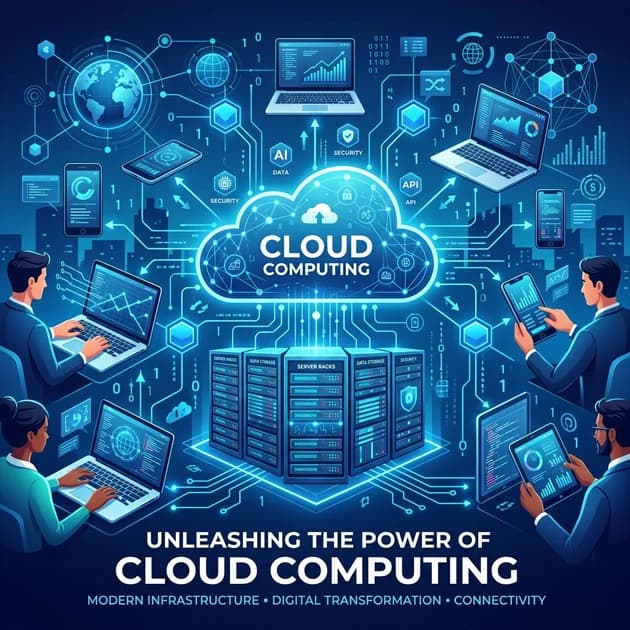
What Is Cloud Computing? A Beginner's Guide to How the Cloud Works (2026)
Learn what cloud computing is, how it works, its benefits, types, and real-world examples. A complete beginner-friendly guide for 2026.

What Is Cybersecurity? A Beginner's Guide to Staying Safe Online (2026)
Learn what cybersecurity is, why it matters, common cyber threats, and practical ways to protect yourself online. A complete beginner-friendly guide for 2026.

 Career Growth
AI Leadership for Managers (2026): The Complete Guide to Leading High-Performing Teams
Master AI leadership for managers in 2026. Discover how to lead high-performing teams using the Locitra LEAD Framework, complete 5-phase management lifecycle, and copy-paste prompt blueprints.

ATS Resume Optimization Guide (2026): How to Beat Applicant Tracking Systems with AI
Master ATS resume optimization in 2026. Discover how to beat Applicant Tracking Systems using the Locitra PASS Framework, clean resume parsing rules, and copy-paste AI prompt blueprints.

 Software Reviews
Proton Pass Review (2026): Is It the Best Privacy-First Password Manager?
Looking for a highly secure, privacy-first password manager? Read our comprehensive Proton Pass review (2026) to see if it is the right choice for you.

Password Manager Pricing Comparison (2026): Find the Best Value
Don’t overpay for digital security. We break down the real costs of the best password managers in 2026, comparing free tiers, premium plans, and family options.