 Software Reviews
Best VPN Services (2026): Top VPNs Compared for Privacy, Streaming and Security

Sunil Kumar Uikey
Founder & Editor-in-Chief
Compare the best VPN services in 2026. Explore features, privacy policies, streaming performance, pricing, and security to choose the right VPN for your needs.
Introduction
As digital surveillance and cyber threats continue to escalate, securing your online footprint is no longer optional. Whether you are working remotely from a local coffee shop or traveling internationally, a Virtual Private Network (VPN) is your first line of defense. The best VPN services in 2026 do far more than just hide your IP address; they encrypt your entire internet connection, protect you from malicious actors, and allow you to access geo-restricted content from anywhere in the world.
However, the VPN market is flooded with hundreds of providers, all claiming to be the fastest and most secure. Choosing the wrong VPN can actually compromise your privacy, as some free or disreputable services secretly log your data or sell it to third parties. That is why selecting a trusted, audited provider is crucial for your overall online security.
In this comprehensive guide, we compare the best VPN services of 2026. We have rigorously evaluated top VPNs like NordVPN, Surfshark, and Proton VPN based on their privacy policies, streaming performance, security features, and overall value. This central hub will help you choose the right VPN for your specific needs, and you can explore our dedicated deep-dive reviews for more granular details.
What Is a VPN and Why Do People Use One?
A Virtual Private Network (VPN) creates a secure, encrypted tunnel between your device and the internet. Instead of connecting directly to a website, your traffic is routed through a remote server operated by the VPN provider. This masks your true IP address and encrypts your data, making your online activities virtually invisible to your Internet Service Provider (ISP), hackers, and government surveillance.
But why are millions of people adopting VPNs in 2026?
Privacy Protection
The primary reason to use a VPN is privacy. Without a VPN, your ISP can monitor, log, and even sell your browsing history. Advertisers use this data to build intrusive profiles about your habits. A high-quality VPN ensures your data remains completely private, shielding your personal information from prying eyes.
Secure Public Wi-Fi Usage
Public Wi-Fi networks in airports, hotels, and cafes are notoriously insecure. Hackers frequently set up fake hotspots or use "man-in-the-middle" attacks to intercept unencrypted data, capturing passwords and financial details. By using a VPN, your traffic is wrapped in military-grade encryption, rendering it useless to anyone trying to intercept it.
Streaming and Content Access
Streaming services like Netflix, Hulu, and BBC iPlayer use geo-blocking to restrict content based on your physical location. The best VPN for streaming allows you to bypass these restrictions by connecting to a server in a different country, granting you access to global content libraries no matter where you travel.
Remote Work Security
As the trend of remote work continues to grow, employees need secure access to company networks from external locations. Much like relying on robust cloud computing infrastructure, businesses mandate VPN usage to ensure that sensitive corporate data remains encrypted and safe from interception when accessed from outside the traditional office environment.
Best VPN Use Cases in 2026
As our digital lives become increasingly complex, the reasons for utilizing a secure VPN continue to evolve. Here are the most prominent use cases for the best VPN services in 2026:
Streaming Global Content
One of the most popular applications for a VPN is bypassing geographical restrictions to unlock global entertainment libraries. Streaming platforms often limit shows and movies to specific regions due to licensing agreements. By using a highly-rated VPN for streaming, you can virtually relocate your device to a different country, granting you access to restricted content on platforms like Netflix, Hulu, BBC iPlayer, and Amazon Prime Video.
Remote Work and Business Security
With remote work models representing the new normal, ensuring corporate data remains protected is a top priority. Employees frequently access sensitive company databases from unsecured home networks. A high-quality VPN encrypts this data in transit, ensuring remote work security and mitigating the risk of data breaches. This is especially vital when connecting to enterprise cloud computing environments.
Public Wi-Fi Protection
Connecting to free Wi-Fi at airports and coffee shops presents a massive security vulnerability. Cybercriminals routinely monitor these open networks to intercept unencrypted traffic, stealing passwords and financial credentials. A secure VPN acts as an impenetrable shield, routing your traffic through an encrypted tunnel to protect your personal data.
Digital Nomads and Travelers
For digital nomads, a VPN is an essential survival tool. It protects you on unfamiliar networks and allows you to access essential home services that might otherwise block foreign IP addresses. If you are learning how to make money online while traveling, securing your income streams with a VPN is an absolute necessity.
Online Privacy and Data Protection
Internet Service Providers, advertisers, and tech giants constantly harvest your browsing history to build detailed behavioral profiles. Premium online privacy tools, particularly a no-logs VPN, prevent these entities from monitoring your online activities, giving you true anonymity.
Secure File Transfers
When sharing sensitive documents, you need assurance that the files cannot be intercepted. A robust VPN encrypts the transfer process from end to end, ensuring that your intellectual property and private communications remain confidential during transit.
Understanding VPN Protocols
When evaluating the best VPN services, it is critical to look beneath the surface at the underlying technology. The foundation of any reliable VPN is its protocol.
What Is a VPN Protocol?
A VPN protocol is a set of rules that determines exactly how your data is routed and encrypted between your device and the VPN server. Different protocols prioritize different aspects of the connection: some are engineered for absolute maximum security, while others are optimized for lightning-fast speeds. Understanding these protocols helps you configure your VPN for your specific daily requirements.
WireGuard
WireGuard is the modern architecture that has revolutionized the VPN industry. Built with an incredibly lightweight codebase, it is significantly easier to audit for vulnerabilities than legacy protocols. WireGuard delivers significantly faster performance, remarkably lower overhead, and near-instant connection times. Because it minimizes latency and speed degradation, many of the best VPNs in 2026 prefer it as their default protocol, ensuring users enjoy seamless 4K streaming and rapid downloads without compromising security.
OpenVPN
For over two decades, OpenVPN has served as the industry standard for secure VPN connections. It is an open-source protocol, meaning cybersecurity experts continually scrutinize its code to ensure there are no hidden flaws. OpenVPN offers incredibly strong security through 256-bit AES encryption and boasts broad compatibility across virtually all operating systems. While it may not match the raw speed of WireGuard, its unmatched reliability makes it the go-to choice for bypassing strict firewalls and securing highly sensitive data transfers.
IKEv2
Internet Key Exchange version 2 (IKEv2) is celebrated for its stability and mobile-friendly architecture. Its defining feature is its ability to handle network changes seamlessly. For instance, if your smartphone switches from home Wi-Fi to a cellular 5G network, IKEv2 ensures a fast reconnection without dropping the secure VPN tunnel. This dynamic resilience makes IKEv2 incredibly useful for travelers bouncing between different connections.
Which VPN Protocol Should You Choose?
For the vast majority of users in 2026, WireGuard (or proprietary variations like NordLynx) is the recommended choice. It provides the optimal balance of top-tier encryption and blistering speeds. However, if you are operating in a heavily restricted network environment where absolute security is paramount, OpenVPN remains an exceptionally reliable fallback. IKEv2 is your best bet for mobile devices experiencing frequent network transitions.
Free VPN vs Paid VPN Services
As you search for online privacy tools, you will inevitably encounter providers offering their services completely free of charge. Understanding the fundamental differences between free and paid VPNs is essential for your digital safety.
Advantages of Free VPNs
The primary advantage of a free VPN is that it costs nothing upfront. For users who need to bypass a quick geo-block or secure a brief connection on public Wi-Fi—and who cannot afford a premium subscription—a free service can serve as a temporary safeguard.
Limitations of Free VPNs
However, free VPNs come with severe functional limitations. They typically impose strict data caps, often limiting you to just a few gigabytes per month. Furthermore, they aggressively throttle connection speeds and restrict access to a very small handful of overcrowded server locations, making them virtually useless for bandwidth-heavy activities like streaming.
Security and Privacy Risks
The most alarming issue involves severe security and privacy risks. Operating a global server network is incredibly expensive. If a provider is not charging a subscription fee, you are likely the product. Many disreputable free VPNs harbor logging concerns, actively tracking browsing history and selling that data to data brokers. Some have even been caught injecting malware or intrusive advertisements.
When a Free VPN Makes Sense
A free VPN only makes sense if you are using a reputable "freemium" service. For example, Proton VPN offers an outstanding free plan subsidized by its paying users. It provides unlimited data and a strict no-logs policy, making it a notable exception, though it still lacks advanced streaming support.
Why Paid VPNs Usually Provide Better Value
Investing a few dollars a month in a premium paid VPN usually provides significantly better value and peace of mind. Paid services rely on a transparent subscription model rather than an advertising model. They offer massive, high-speed server networks spread across the globe, ensuring fast performance and reliable unblocking of streaming platforms. Furthermore, paid VPNs provide essential features like kill switches, robust independent security audits, and dedicated customer support.
How We Evaluated the Best VPN Services
Our software reviews are rooted in objective testing and deep technical analysis. To determine the best VPN providers of 2026, we evaluated dozens of services against the following strict criteria:
Security Features
We looked for industry-standard AES-256 bit encryption, secure protocols like WireGuard and OpenVPN, and essential fail-safes like a kill switch (which drops your internet connection if the VPN drops, preventing data leaks).
Privacy Policies
A VPN is only as good as its privacy policy. We only recommend VPNs that have strict, proven "no-logs" policies, preferably verified by independent third-party audits from reputable firms like PwC or Deloitte.
Server Network
A larger server network generally translates to better speeds and more reliable connections. We assessed the geographical spread of servers, looking for providers that offer diverse locations across the globe.
Speed and Reliability
Because a VPN routes your traffic through an intermediary server, some speed loss is inevitable. However, the best VPN services optimize their infrastructure so that this drop is negligible, allowing for smooth 4K streaming and fast downloads.
Ease of Use
Whether you are a cybersecurity expert or a complete beginner, the VPN app should be intuitive and easy to navigate across all platforms, including Windows, Mac, iOS, Android, and Linux.
Pricing and Value
We compared the starting price of each VPN against the features it offers. We also looked for generous money-back guarantees and transparent pricing structures.
Enjoying this comparison? Subscribe to the Locitra newsletter for software reviews, privacy tools, AI resources, and online income insights.
Best VPN Services (2026)
Pricing & Feature Verification: VPN features, streaming capabilities, and pricing bundles evolve rapidly. The details below reflect the plans for NordVPN, Surfshark, and Proton VPN as of July 2026. Always verify the latest costs directly on the official provider websites.
Based on our extensive testing, here are the top VPN providers you should consider for securing your digital life.
NordVPN
Key Features
NordVPN remains the industry heavyweight in 2026, offering a massive network of over 6,000 servers in 111 countries. It utilizes its proprietary NordLynx protocol (built around WireGuard) to deliver blazing-fast speeds without compromising security. Advanced features like Double VPN, Onion Over VPN, and Threat Protection (which blocks malware, ads, and trackers) make it a powerhouse for privacy enthusiasts.
Pros and Cons
Pros:
- Exceptionally fast connection speeds.
- Industry-leading security features and Threat Protection.
- Excellent at unblocking streaming services.
- Independently audited no-logs policy.
Cons:
- The map-based interface on mobile can feel slightly cluttered.
- Renewal prices can be higher than the initial introductory offer.
Best For
NordVPN is the best all-around VPN. It is perfect for users who want maximum security, reliable streaming, and advanced privacy tools in one comprehensive package. For a deeper dive into its performance, read our full NordVPN Review (2026) or see how it compares head-to-head in our detailed NordVPN vs Surfshark comparison.
Pricing Overview
- Starting Price: ~$3.09/month (on a 2-year plan).
- 30-day money-back guarantee.
Surfshark
Key Features
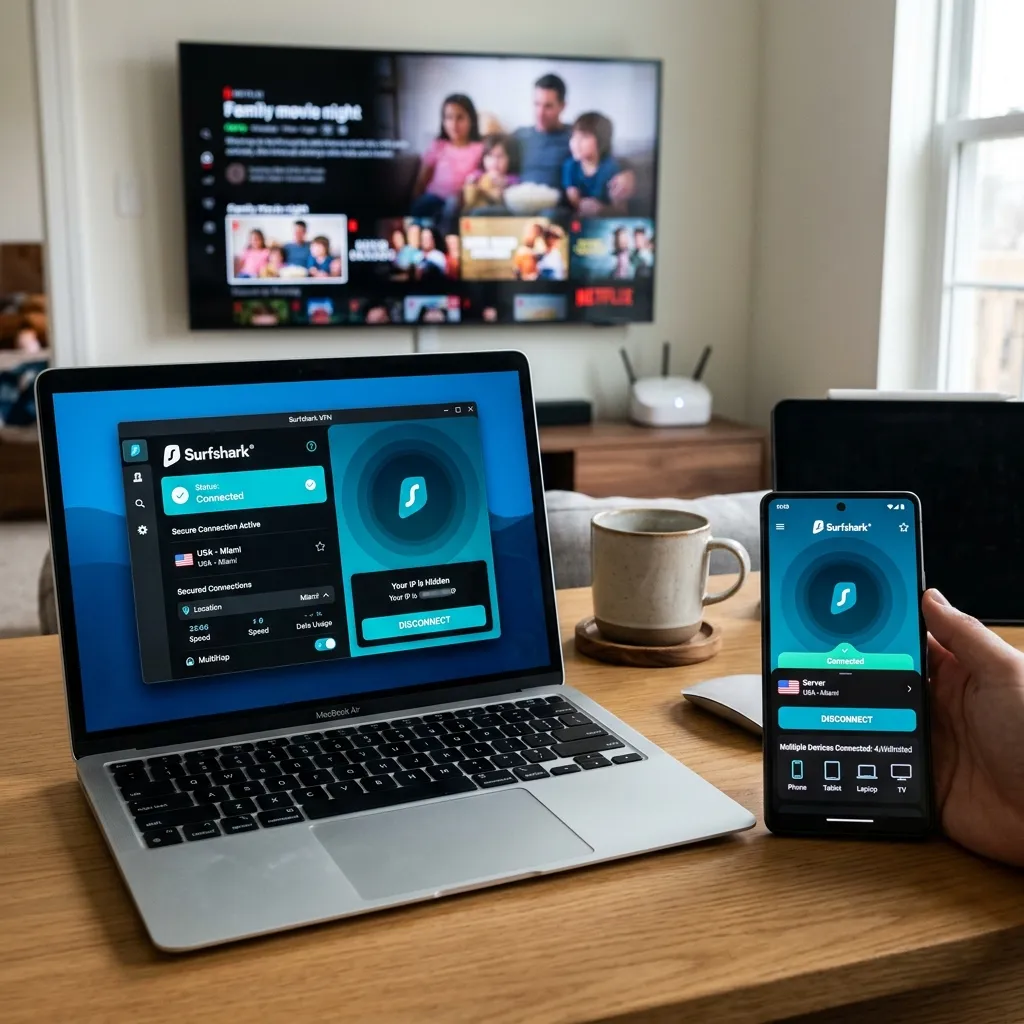
Surfshark is the ultimate value champion. Despite its affordable price tag, it packs premium features like a strict no-logs policy, CleanWeb (ad and malware blocker), and MultiHop (double VPN). Its standout feature, however, is offering unlimited simultaneous connections on a single subscription, making it incredibly family-friendly.
Pros and Cons
Pros:
- Unlimited device connections.
- Highly affordable, especially on long-term plans.
- Strong streaming capabilities and global server coverage.
- Intuitive, beginner-friendly apps.
Cons:
- Speeds can occasionally be inconsistent on distant servers.
- Customer support wait times can be slightly longer during peak hours.
Best For
Surfshark is ideal for large households, students, or anyone on a budget who needs to protect multiple devices without spending a fortune. Learn more in our detailed Surfshark Review (2026).
Pricing Overview
- Starting Price: ~$2.19/month (on a 2-year plan).
- 30-day money-back guarantee.
Proton VPN
Key Features
Developed by the CERN scientists behind ProtonMail, Proton VPN places privacy above all else. Based in Switzerland, it benefits from strong privacy laws. In 2026, Proton VPN features a unique Secure Core architecture, routing traffic through privacy-friendly countries before reaching its destination to defend against network-based attacks. It is fully open-source and regularly audited.
Pros and Cons
Pros:
- Uncompromising focus on privacy and security.
- Open-source apps and rigorous independent audits.
- Secure Core servers for high-risk users.
- Excellent free tier with unlimited data.
Cons:
- The premium plans are slightly more expensive than competitors.
- The server network is smaller compared to NordVPN or Surfshark.
Best For
Proton VPN is the best choice for journalists, activists, and hardcore privacy advocates who prioritize transparency and security over everything else. It is also a fantastic option if you pair it with a secure manager like Bitwarden. Discover more in our Proton VPN Review (2026).
Pricing Overview
- Starting Price: ~$4.99/month (on a 2-year plan).
- Free plan available (unlimited data, 3 server locations).
- 30-day money-back guarantee.
NordVPN vs Surfshark vs Proton VPN
When comparing the best VPN services in 2026, the discussion frequently narrows down to three major industry leaders: NordVPN, Surfshark, and Proton VPN. Understanding their distinct strengths will help you make an informed decision for your privacy needs.
Privacy Comparison
All three VPNs boast strict, independently audited no-logs policies. However, their approaches to privacy architecture differ. Proton VPN is headquartered in privacy-friendly Switzerland and features fully open-source apps alongside a unique Secure Core routing system that routes traffic through multiple privacy-friendly jurisdictions. NordVPN, based in Panama, matches this high standard with its powerful Threat Protection feature, which actively stops malware and web trackers before they load. Surfshark is highly secure and utilizes RAM-only servers, though it operates under a slightly less ideal jurisdiction (the Netherlands), which is mitigated by its strict audited policies.
Streaming Comparison
If you are looking for the best VPN for streaming, NordVPN is widely considered the industry champion. Its proprietary SmartPlay technology seamlessly bypasses the toughest geo-blocks, unlocking regional libraries for Netflix, Hulu, and BBC iPlayer with virtually zero buffering. Surfshark follows very closely, offering excellent streaming performance and access to numerous international catalogs. Proton VPN has vastly improved its streaming capabilities and reliably unblocks major platforms, but it does not quite match the sheer breadth of unblocking power offered by NordVPN.
Ease of Use
Surfshark stands out for its incredibly intuitive, user-friendly interface. It is designed to be accessible for complete beginners, and its unlimited simultaneous connections mean you can easily install it on every device in your household. NordVPN features an interactive map-based interface that many users love, providing a visual way to select your server location. Proton VPN offers a sleek, data-rich interface that appeals to tech enthusiasts who want to see detailed connection metrics at a glance.
Pricing Comparison
When it comes to pricing, Surfshark is the undeniable value leader, typically costing roughly $2.19 per month on a long-term plan while covering unlimited devices. NordVPN sits comfortably in the middle, offering robust premium features for around $3.09 per month. Proton VPN is the premium option, generally starting around $4.99 per month for its paid plans, reflecting its specialized privacy architecture and exceptional security standards.
Best Overall Choice
For the vast majority of users conducting a VPN comparison, NordVPN is the best overall choice. It offers the perfect balance of blazing-fast speeds, top-tier security features, and exceptional streaming capabilities.
Best Budget Choice
Surfshark is the best budget choice. It delivers premium features and unlimited device connections at a remarkably low price point, making it ideal for families and students.
Best Privacy Choice
For journalists or anyone operating in a high-risk digital environment, Proton VPN is the best privacy choice. Pairing it with a trusted password manager like 1Password creates a formidable defense against cyber threats.
VPN Comparison Table
| VPN | Best For | Privacy Rating | Streaming Support | Device Support | Starting Price |
|---|---|---|---|---|---|
| NordVPN | Overall Security & Speed | Excellent (Audited) | 4K Netflix, Hulu, BBC | 10 Devices | ~$3.09/mo |
| Surfshark | Value & Families | Excellent (Audited) | 4K Netflix, Hulu, BBC | Unlimited | ~$2.19/mo |
| Proton VPN | Hardcore Privacy | Outstanding (Audited) | Netflix, Amazon Prime | 10 Devices | ~$4.99/mo |
Which VPN Is Best for Different Users?
Selecting the right provider depends on your specific use case. Here is our breakdown of the best VPNs based on user needs.
Best for Privacy
If privacy is your absolute top priority, Proton VPN is the winner. Its Swiss jurisdiction, Secure Core routing, and transparent open-source apps make it the most trustworthy option for users operating in highly monitored environments. Combining Proton VPN with one of the best password managers ensures your digital life is virtually impenetrable.
Best for Streaming
For unblocking global content, NordVPN takes the crown. Its SmartPlay technology seamlessly bypasses geo-restrictions, and its blazing-fast NordLynx protocol ensures your streams won't suffer from frustrating buffering, even in 4K resolution.
Best Budget Option
Surfshark delivers unparalleled value. By offering premium security features and unlimited device connections for roughly the price of a cup of coffee per month, it is the clear choice for anyone looking to save money while staying secure.
Best for Remote Workers
Remote workers need reliability and strong encryption to protect corporate assets. NordVPN excels here, offering robust security protocols and the ability to set up Meshnet, allowing secure, direct connections between devices, which is perfect for decentralized teams.
Best Free VPN Alternative
While we generally advise against free VPNs due to data logging practices, Proton VPN's free tier is the rare exception. It offers unlimited bandwidth and no ads, subsidized by their paying users. However, it only provides access to three server locations and does not support streaming, making it a basic security tool rather than an entertainment hub.
Common VPN Myths
As VPNs become mainstream, several myths have emerged that need debunking:
- VPNs Make You Completely Anonymous: False. A VPN drastically improves your privacy by hiding your IP and encrypting data, but it does not make you immune to browser fingerprinting, cookies, or malware if you download infected files.
- All VPNs Are the Same: False. The underlying technology might be similar, but privacy policies, server infrastructure, and jurisdictions vary wildly. A cheap, untrusted VPN is worse than no VPN at all.
- VPNs Slow Down Your Internet to a Crawl: While older protocols caused significant speed drops, modern protocols like WireGuard (used by NordVPN and Surfshark) result in negligible speed loss, often unnoticeable during daily browsing.
VPN Limitations You Should Know
While VPNs are powerful tools, they have limitations. A VPN will not protect you from:
- Phishing Scams: If you willingly enter your credentials into a fake website, a VPN cannot stop you. This is why using a dedicated tool like 1Password is critical for comprehensive security.
- Malware and Viruses: While some VPNs have basic ad-blockers, they are not a replacement for dedicated antivirus software.
- Account-Level Tracking: If you are logged into your Google or Facebook account while browsing, those companies can still track your activity on their platforms, regardless of your IP address.
VPN Buying Checklist
Before you commit to a subscription, use this practical VPN buying checklist to ensure you are selecting a trustworthy service that meets your specific needs.
No-Logs Policy
- Requirement: The VPN must have a strict, transparent "no-logs" policy.
- Why it matters: This guarantees that the provider does not record, store, or share your browsing history, IP address, or connection timestamps.
Independent Security Audits
- Requirement: The provider should regularly undergo independent security audits by respected third-party firms.
- Why it matters: Audits verify that the VPN's infrastructure and no-logs claims are factually accurate and not just marketing hype.
Kill Switch
- Requirement: A robust, automatic kill switch is mandatory.
- Why it matters: If your VPN connection unexpectedly drops, the kill switch instantly severs your internet access, preventing your unencrypted data from leaking.
DNS Leak Protection
- Requirement: Built-in protection against DNS, IPv6, and WebRTC leaks.
- Why it matters: Flawed software can sometimes leak your DNS requests, exposing the websites you visit. Leak protection ensures your traffic remains entirely within the encrypted tunnel.
Multi-Device Support
- Requirement: Generous simultaneous device connections and broad app compatibility.
- Why it matters: You should be able to protect your smartphone, laptop, tablet, and router under a single subscription.
Server Network Size
- Requirement: A wide geographical distribution of fast servers.
- Why it matters: A larger network prevents server congestion, guarantees faster speeds, and gives you more options for bypassing regional geo-blocks.
Customer Support
- Requirement: 24/7 live chat support with knowledgeable agents.
- Why it matters: If you encounter technical issues, you want immediate assistance rather than waiting days for an email reply.
Money-Back Guarantees
- Requirement: A risk-free trial period, typically a 30-day money-back guarantee.
- Why it matters: This allows you to test the VPN's performance on your own home network before making a long-term financial commitment. Combine these tools with the best password managers for optimal security.
How to Choose the Right VPN
When making your final decision, consider the following checklist:
- Identify Your Needs: Are you primarily looking to bypass geo-blocks, protect your online income strategies (like those discussed in our guide on how to make money online), or secure your data on public Wi-Fi?
- Read the Privacy Policy: Look for a strict, independently audited no-logs policy.
- Test the Speeds: Take advantage of money-back guarantees to test the VPN's performance on your actual network.
- Check Device Compatibility: Ensure the VPN offers apps for your specific devices (e.g., routers, smart TVs, or Linux).
FAQ
Are VPNs legal?
In the vast majority of countries, including the US, UK, Canada, and most of Europe, using a VPN is perfectly legal. However, some highly restrictive countries like China, Russia, and Iran tightly regulate or ban VPN usage. Always check the local laws if you are traveling internationally.
Should I leave my VPN on all the time?
For maximum security, especially on mobile devices that frequently connect to untrusted public Wi-Fi networks, leaving your VPN connected continuously is highly recommended. Modern VPNs are efficient enough that they won't significantly drain your battery or internet speed.
Can I use a free VPN instead of paying?
Most free VPNs are dangerous. They often log and sell your data to advertisers to cover their server costs, completely defeating the purpose of a VPN. The only secure exception is the free tier offered by premium providers like Proton VPN, though these tiers are severely limited in features and speed.
Final Verdict
In 2026, navigating the internet without a VPN exposes your private data to unnecessary risks. A reliable VPN service is a foundational element of any modern cybersecurity strategy.
If you want the ultimate combination of top-tier security, blazing speeds, and excellent streaming capabilities, NordVPN remains our top recommendation. For budget-conscious users or large families needing unlimited connections, Surfshark is an unbeatable value. And for those who refuse to compromise on absolute privacy and transparency, Proton VPN is the clear winner.
Whichever provider you choose from this list, you are taking a crucial step towards reclaiming your digital privacy.
Related Articles
- NordVPN Review (2026)
- Surfshark Review (2026)
- Proton VPN Review (2026)
- Best Password Managers (2026)
- Bitwarden Review (2026)
Enjoyed this article?
Get practical AI tools, technology insights, software reviews, career growth advice, and online income strategies delivered to your inbox.
Keep Reading
Related Articles

NordVPN vs Surfshark (2026): Which VPN Is Better for Privacy, Streaming, Speed, and Value?
Compare NordVPN vs Surfshark in 2026. Discover differences in speed, privacy, security, streaming performance, pricing, features, and value to find the best VPN for your needs.

NordVPN Review (2026): Features, Pricing, Pros and Cons
Read our in-depth NordVPN review for 2026. Explore features, security, privacy, streaming performance, pricing, pros, cons, and whether NordVPN is worth it.

Proton VPN Review (2026): Features, Pricing, Privacy and Performance
Read our in-depth Proton VPN review for 2026. Explore security, privacy, pricing, free plan limitations, Secure Core technology, and whether Proton VPN is worth it.
Surfshark Review (2026): Features, Pricing, Pros and Cons
Read our in-depth Surfshark review for 2026. Explore features, pricing, security, streaming performance, privacy policies, and whether Surfshark is worth it.

 Technology
Digital Identity Explained: How Online Identity and Verification Work in 2026
A comprehensive guide to digital identity explained. Discover how online verification works, modern authentication methods, and the future of digital trust in 2026.

What Is Cybersecurity? A Beginner's Guide to Staying Safe Online (2026)
Learn what cybersecurity is, why it matters, common cyber threats, and practical ways to protect yourself online. A complete beginner-friendly guide for 2026.